Feeding Schedules and Portions: Complete Guide
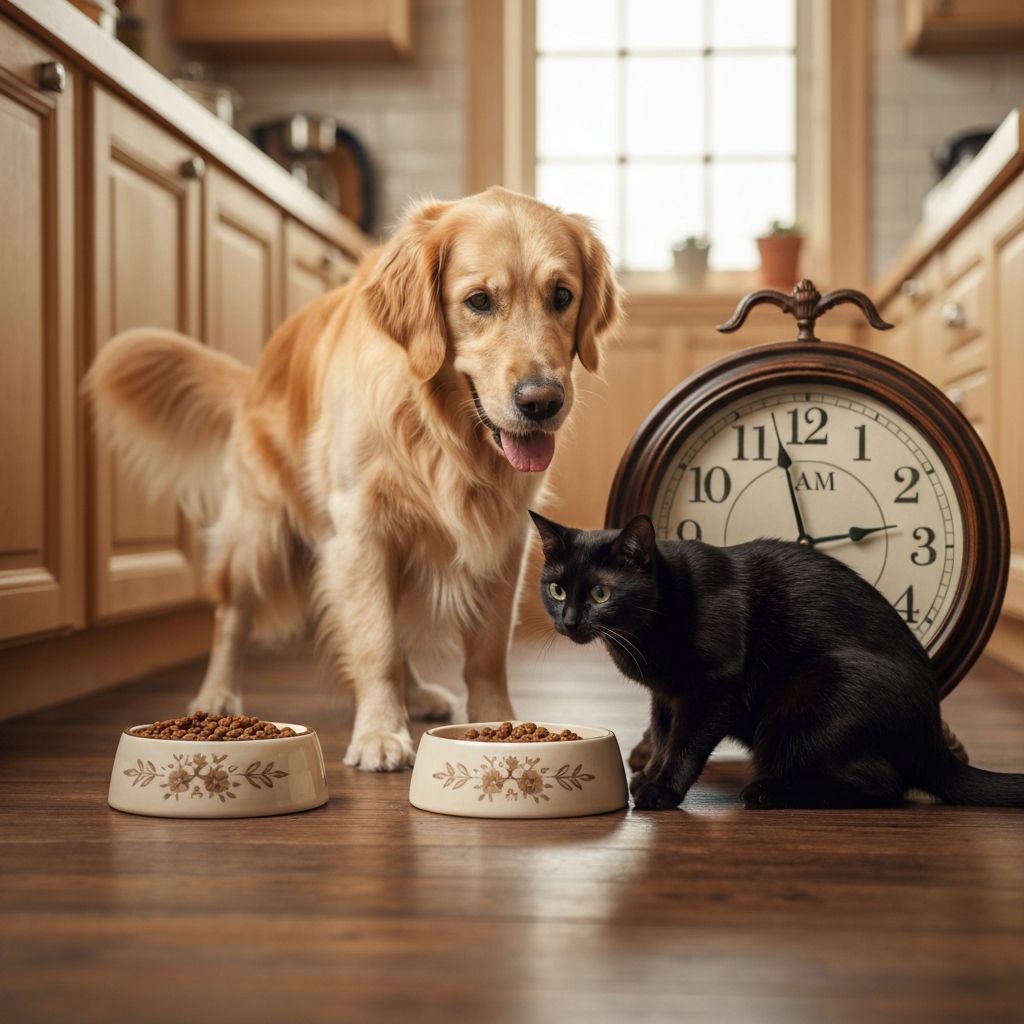
Master the art and science of feeding your pet with optimal schedules and accurate portions. This comprehensive guide covers meal timing, portion calculation, life-stage requirements, and strategies for maintaining your pet's ideal body condition.
Understanding Caloric Needs
Calculating Daily Energy Requirements
Determining how much to feed your pet starts with understanding their daily energy requirements (DER). The calculation begins with resting energy requirement (RER), the calories needed for basic body functions at rest. The formula is: RER = 70 × (body weight in kg)^0.75. For convenience, you can also use: RER = 30 × (body weight in kg) + 70, which is reasonably accurate for pets weighing 2-45 kg.
Daily energy requirement multiplies RER by an appropriate factor based on life stage, activity level, and reproductive status. Neutered adult dogs at normal activity need 1.6 × RER. Intact adult dogs require 1.8 × RER. Active working dogs may need 2.0-5.0 × RER depending on work intensity. Growing puppies need 2.0-3.0 × RER, decreasing as they approach adult size. Senior dogs with decreased activity typically need 1.2-1.4 × RER.
For cats, neutered adults need approximately 1.2-1.4 × RER, while intact cats require 1.4-1.6 × RER. Growing kittens need 2.0-2.5 × RER. Pregnant cats in late pregnancy need 2.0 × RER, and lactating queens may require 2.0-6.0 × RER depending on litter size. These are starting points – individual metabolism varies significantly, requiring adjustment based on your pet's body condition over time.
Factors Affecting Caloric Needs
Numerous factors influence how many calories your individual pet requires. Breed metabolism varies – some breeds like Siberian Huskies are metabolically efficient, requiring fewer calories per pound than expected, while others like Greyhounds have higher baseline metabolism. Body composition matters: muscle tissue requires more energy than fat tissue, so heavily muscled dogs need more calories than flabby dogs of the same weight.
Activity level dramatically impacts energy needs. A working Border Collie herding livestock may require 3-4 times more calories than a sedentary apartment dog. Environmental temperature affects needs: pets living outdoors in cold climates may need 50-90% more calories than indoor pets to maintain body temperature. Hot environments can decrease appetite and slightly reduce caloric needs.
Health status influences requirements. Pets recovering from surgery or illness often need increased calories for healing. Chronic diseases may increase or decrease needs: hyperthyroidism increases metabolic rate significantly, while hypothyroidism decreases it. Cancer can increase caloric requirements through various mechanisms. Medications may affect appetite and metabolism – corticosteroids typically increase appetite and can promote weight gain even without increased food intake.
Converting Calories to Portions
Once you know your pet's daily caloric requirement, convert this to actual food portions using the caloric density of their diet. Pet food labels list "metabolizable energy" (ME) in kcal per cup, can, or kilogram. Divide your pet's daily caloric requirement by the food's caloric density to determine how much to feed. For example, if your dog needs 800 kcal daily and the food contains 400 kcal per cup, feed 2 cups daily.
Be aware that measuring cups are not standardized and can vary significantly in volume. A kitchen measuring cup is more accurate than a random scoop. For greatest precision, especially important for small pets or weight management, weigh food using a kitchen scale. Many pet foods list weight per cup on the label, allowing conversion from volume to weight measurements.
Account for treats and table food in daily caloric intake. Treats should comprise no more than 10% of total daily calories to prevent nutritional imbalance. If your dog needs 800 kcal daily, limit treats to 80 kcal. This means reducing meal portions by the calories provided in treats. Many pet owners don't realize that a few small treats can represent 15-20% of a small dog's or cat's daily caloric needs, leading to gradual weight gain.
Optimal Feeding Schedules
Meal Frequency for Dogs
Adult dogs typically do well with two meals daily, though once-daily feeding is acceptable for some dogs. Twice-daily feeding has several advantages: smaller meals are easier to digest, blood sugar remains more stable throughout the day, and twice-daily feeding may reduce the risk of bloat (gastric dilatation-volvulus) in large, deep-chested breeds. Dividing daily portions into two meals also helps with appetite regulation and reduces begging behavior.
Puppies require more frequent feeding due to smaller stomach capacity and higher metabolic rates. Feed puppies 8-12 weeks old four times daily. From 3-6 months, transition to three meals daily. Most puppies can decrease to twice-daily feeding around 6 months of age. Toy breed puppies may need to maintain three meals daily longer due to susceptibility to hypoglycemia with prolonged fasting.
Some situations warrant more frequent feeding in adult dogs. Dogs with diabetes mellitus typically need meals coordinated with insulin injections, usually twice daily. Dogs with gastrointestinal issues may tolerate smaller, more frequent meals better than larger portions. Working dogs may benefit from a small meal before activity and the main meal after work. Very small dogs (under 10 pounds) may prefer three smaller meals to prevent hypoglycemia.
Meal Frequency for Cats
Cats are natural grazers, consuming multiple small meals throughout the day when hunting. However, modern indoor cats benefit from scheduled meals rather than free-choice feeding, which commonly leads to obesity. Most adult cats do well with 2-3 scheduled meals daily. Some cats successfully regulate intake with free-choice dry food, but many overeat, particularly neutered indoor cats.
Kittens need frequent feeding due to their small stomach capacity and rapid growth. Feed kittens under 12 weeks old at least 4-5 times daily. From 3-6 months, transition to 3-4 meals daily. Most cats can move to twice-daily feeding by 6-9 months of age. Maintain consistent meal times to establish routine, which helps with appetite regulation and litter box schedule predictability.
Puzzle feeders and food-dispensing toys can satisfy cats' natural foraging instincts while controlling portions. These devices slow eating, provide mental stimulation, and encourage physical activity during meals. Divide daily portions among multiple puzzle feeders placed in different locations to mimic hunting behavior. This approach works particularly well for indoor cats needing more activity and mental engagement.
Free-Choice vs. Meal Feeding
Free-choice (ad libitum) feeding involves leaving food available at all times, allowing pets to eat whenever they choose. This method works for some cats and dogs who naturally regulate intake but leads to obesity in many pets, particularly neutered animals and certain breed predispositions. Free-choice feeding makes portion control impossible, complicates multi-pet households, and prevents monitoring of appetite changes that may signal illness.
Meal feeding offers better portion control, makes appetite changes obvious (important for early disease detection), works better in multi-pet households where you can monitor individual intake, and establishes routine helpful for house training puppies. The main disadvantage is less convenience for owners with unpredictable schedules, though automatic feeders can address this concern.
Combination feeding involves leaving dry food available while providing scheduled wet food meals. This method works for some cats who prefer grazing dry food but need wet food for hydration and calorie control. However, carefully measure the amount of dry food provided to prevent overconsumption. Many owners provide measured dry food in the morning, removing anything remaining before feeding wet food in the evening.
Life Stage Nutrition
Feeding Puppies and Kittens
Growth is the most nutritionally demanding life stage, requiring proper nutrition for optimal development. Feed puppies and kittens diets specifically formulated for growth, marked "for all life stages" or "for growth" on the label. These foods provide increased calories, protein, calcium, phosphorus, and other nutrients critical for development. Never feed growing animals adult maintenance or senior diets, which don't meet developmental needs.
Large breed puppies (expected adult weight over 50 pounds) have special requirements. Excessive calcium or caloric intake during growth increases the risk of developmental orthopedic diseases including hip dysplasia, osteochondrosis, and panosteitis. Feed large breed puppies diets specifically formulated for large breed growth, which control calcium and phosphorus levels while providing adequate nutrition. Don't supplement calcium – this disrupts the carefully balanced calcium:phosphorus ratio in growth foods.
Monitor growing pets' body condition closely. Puppies and kittens should have visible but not prominent ribs, a definite waist when viewed from above, and abdominal tuck when viewed from the side. Overfeeding during growth doesn't accelerate maturation – it promotes obesity and orthopedic problems. Research shows lean puppies have fewer orthopedic problems and longer lifespans than overweight littermates. Adjust portions based on body condition every 2-4 weeks during rapid growth phases.
Feeding Adult Pets
Adult pets require maintenance nutrition supporting health without promoting obesity. Most pets transition to adult food around 12 months of age, though giant breed dogs may continue growth formulas until 18-24 months. Choose foods labeled for adult maintenance, ensuring they meet AAFCO standards through feeding trials rather than just nutritional analysis.
Portion sizes depend on individual metabolism, activity level, and body condition. Start with manufacturer recommendations based on current weight, then adjust based on body condition assessment every 2-4 weeks. If your pet gains weight, reduce portions by 10-15% and reassess in 2-3 weeks. If losing weight unintentionally, increase portions by 10-15%. Remember that feeding guides provide starting points – individual variation is significant.
Active working dogs and athletic pets need increased calories, potentially requiring performance or active dog formulas with higher caloric density. Conversely, low-activity pets may need "light" or "reduced calorie" formulas to prevent weight gain while maintaining nutritional adequacy. Reassess needs seasonally for outdoor pets or those with varying activity levels throughout the year.
Feeding Senior Pets
Senior pet nutrition focuses on maintaining lean body mass, supporting organ function, and managing age-related conditions. Dogs typically become senior around age 7-10 depending on size (large breeds age faster). Cats are considered senior around age 7-10 and geriatric after age 11-14. Senior pets often need fewer calories due to decreased activity and metabolism but require adequate protein to maintain muscle mass.
Senior diets typically contain moderate fat for calorie control, high-quality protein for muscle maintenance, increased fiber for digestive health and satiety, controlled phosphorus for kidney support, enhanced antioxidants, and added omega-3 fatty acids for anti-inflammatory effects. However, there's no one-size-fits-all senior diet – some older pets need increased calories if losing weight, while others need restriction if becoming sedentary.
Monitor senior pet body condition and weight monthly. Unintentional weight loss may indicate underlying disease requiring veterinary investigation. Muscle loss (sarcopenia) can occur even without overall weight loss and requires aggressive nutritional intervention including increased protein intake. Some senior pets develop reduced appetite requiring palatability enhancement through warming food, adding toppers, or offering more frequent small meals. Dental disease commonly affects seniors and may necessitate softer food textures.
Body Condition Scoring
Using the Body Condition Score System
Body condition scoring (BCS) is more useful than weight alone for assessing whether your pet is too thin, ideal, or overweight. The most common system uses a 9-point scale where 4-5 represents ideal body condition, 1-3 indicates underweight, and 6-9 represents overweight to obese. At ideal body condition (BCS 4-5), ribs are easily felt with minimal pressure but not prominently visible, a waist is visible from above, and an abdominal tuck is present when viewed from the side.
Assess body condition by palpating the rib cage – you should feel ribs easily with light pressure, similar to feeling the back of your hand. If you must press firmly to feel ribs or can't feel them at all, your pet is overweight. If ribs are prominently visible without palpation, your pet may be underweight (some sight hounds naturally show visible ribs). View from above: the body should narrow behind the ribs, creating a visible waist. From the side, the abdomen should tuck up toward the pelvis rather than hanging level with or below the chest.
Different breeds have variations in normal body shape. Sight hounds (Greyhounds, Whippets) naturally have more visible bone structure. Brachycephalic breeds (Bulldogs, Pugs) often have stockier builds. Long-haired breeds can be deceivingly heavy under thick coats. Always palpate to assess body condition in fluffy pets rather than relying on visual assessment alone. Score body condition at least monthly, adjusting portions proactively to maintain BCS 4-5 rather than waiting until significant weight gain occurs.
Adjusting Portions Based on Body Condition
If your pet's body condition score exceeds ideal (BCS 6 or higher), reduce daily portions by 10-20% depending on how overweight they are. For mild overweight (BCS 6), reduce by 10-15%. For moderate overweight (BCS 7-8), reduce by 15-20%. For obese pets (BCS 9), consider consultation with a veterinarian for supervised weight loss plan, as these pets often need more aggressive calorie restriction plus medical evaluation for obesity-related health issues.
Reassess body condition every 2-3 weeks during weight loss efforts. Appropriate weight loss rate is 1-2% body weight per week for dogs, 0.5-1% weekly for cats. Faster weight loss can be dangerous, particularly in cats where rapid weight loss may cause hepatic lipidosis (fatal liver disease). If weight loss stalls despite reduced portions, further decrease calories by 10% or increase exercise if possible. Some pets require significant calorie restriction to achieve weight loss due to metabolic adaptation.
For underweight pets (BCS 1-3), first rule out underlying disease through veterinary examination. Once medical issues are addressed, increase portions by 10-20% every 1-2 weeks until desired body condition is achieved. Choose energy-dense foods for efficient weight gain in thin pets. Some pets benefit from more frequent meals or overnight access to food if previous feeding restrictions contributed to underweight condition. Monitor thin pets closely during weight gain to prevent overshooting into overweight territory.
Special Feeding Situations
Multi-Pet Households
Feeding multiple pets presents challenges including preventing food stealing, ensuring each pet receives appropriate portions, accommodating different dietary needs, and monitoring individual appetite. Consider feeding pets in separate locations (different rooms, using baby gates, or crate feeding) to prevent faster eaters from stealing from slower companions. This separation also allows monitoring of individual intake to identify appetite changes indicating illness.
For homes with different life stages (puppies with adult dogs, kittens with adult cats), separate feeding prevents inappropriate food consumption. Puppies/kittens need growth formulas while adults need maintenance diets. Adult dogs sometimes develop gastroenteritis from consuming rich puppy food. Adult cats may gain weight eating kitten food. Physical separation or scheduled feeding times for different pets solves these issues.
Pets with different food allergies or medical conditions require careful separation to prevent accidental exposure to problem ingredients. Some households successfully use elevated feeding stations for pets needing special diets, placing food out of reach of others. Automatic feeders with pet-specific microchip or RFID collar sensors can provide one pet access while excluding others, useful for free-choice feeding of special diets.
Feeding During Illness or Medication
Illness often affects appetite, yet adequate nutrition supports recovery. Tempt sick pets with warmed food (releases aromas), adding water or low-sodium broth to increase moisture and palatability, offering extra-palatable foods like boiled chicken with rice, or feeding smaller more frequent meals. Hand-feeding sometimes encourages reluctant eaters. If appetite remains poor for more than 24-48 hours (less time for small pets, kittens, or puppies), consult your veterinarian as appetite stimulants or assisted feeding may be necessary.
Many medications are best absorbed with food. Give these with meals or immediately after to optimize absorption and minimize gastrointestinal upset. Some medications, however, should be given on an empty stomach for optimal absorption. Always clarify medication timing and food interactions with your veterinarian or veterinary pharmacist. Some medications increase appetite (corticosteroids, certain antihistamines), necessitating portion reduction to prevent excessive weight gain.
Certain health conditions require meal timing coordination with medication. Diabetic pets typically need consistent meal timing coordinated with insulin injections, usually feeding half the daily portion before each insulin dose. Pets on thyroid medication should receive thyroid pills 1-2 hours before or 3-4 hours after meals for optimal absorption. Dogs on anti-seizure medications may need food with doses to reduce gastrointestinal side effects.
Feeding for Specific Activities
Working dogs, sporting dogs, and highly active pets have unique nutritional timing requirements. Avoid feeding large meals immediately before vigorous exercise, as this increases bloat risk and can cause discomfort during activity. Feed a small portion (1/4-1/3 daily amount) 2-3 hours before activity, then provide the remainder 1-2 hours after exercise when the pet has cooled down. This timing provides fuel for activity while minimizing gastrointestinal issues.
Endurance activities (hunting, agility, sledding) benefit from high-fat diets providing sustained energy. Dogs performing continuous work in cold environments may need calorie increases of 50-100% or more compared to sedentary periods. Provide frequent water access before, during, and after activity to prevent dehydration. Consider electrolyte supplements for prolonged intense activity causing heavy panting and fluid loss.
Sprint activities (racing, herding) benefit from higher-carbohydrate intake for readily available energy. Recovery nutrition is important after intense activity: provide food within 30-60 minutes post-exercise when metabolic pathways are primed for nutrient uptake and glycogen restoration. Active pets may need increased B vitamins, antioxidants, and joint support supplements beyond what typical maintenance diets provide.
Conclusion and Key Takeaways
Appropriate feeding schedules and portions are fundamental to pet health, affecting everything from daily energy to long-term chronic disease risk. The key principle is individualizing nutrition to your specific pet's needs rather than rigidly following label recommendations. Calculate baseline caloric needs, adjust based on activity level and life stage, monitor body condition regularly, and make portion adjustments proactively to maintain ideal body condition.
Most adult dogs and cats thrive on twice-daily scheduled meals providing better appetite monitoring, easier portion control, and more stable energy throughout the day compared to free-choice feeding. Growing puppies and kittens need more frequent meals, while special situations including illness, pregnancy, or intense athletic activity require modified schedules. Always measure portions accurately using measuring cups or scales, accounting for treats and table food within daily caloric allowance.
Regular body condition assessment is more important than weight monitoring alone. Maintain your pet at BCS 4-5 (9-point scale) with ribs easily felt, visible waist, and abdominal tuck. Make gradual portion adjustments when body condition shifts from ideal, reassessing every 2-4 weeks until optimal condition is restored. Work with your veterinarian to address weight changes, appetite fluctuations, or special nutritional needs related to health conditions, life stage transitions, or activity level changes.
Medical Disclaimer: This article is for informational purposes only and does not constitute professional veterinary advice. Always consult with a licensed veterinarian before making decisions about your pet's health or care.